Fossil AI II—Petrodollars and the AI Infrastructure Boom
This post is on my substack techno-statecraft: here.
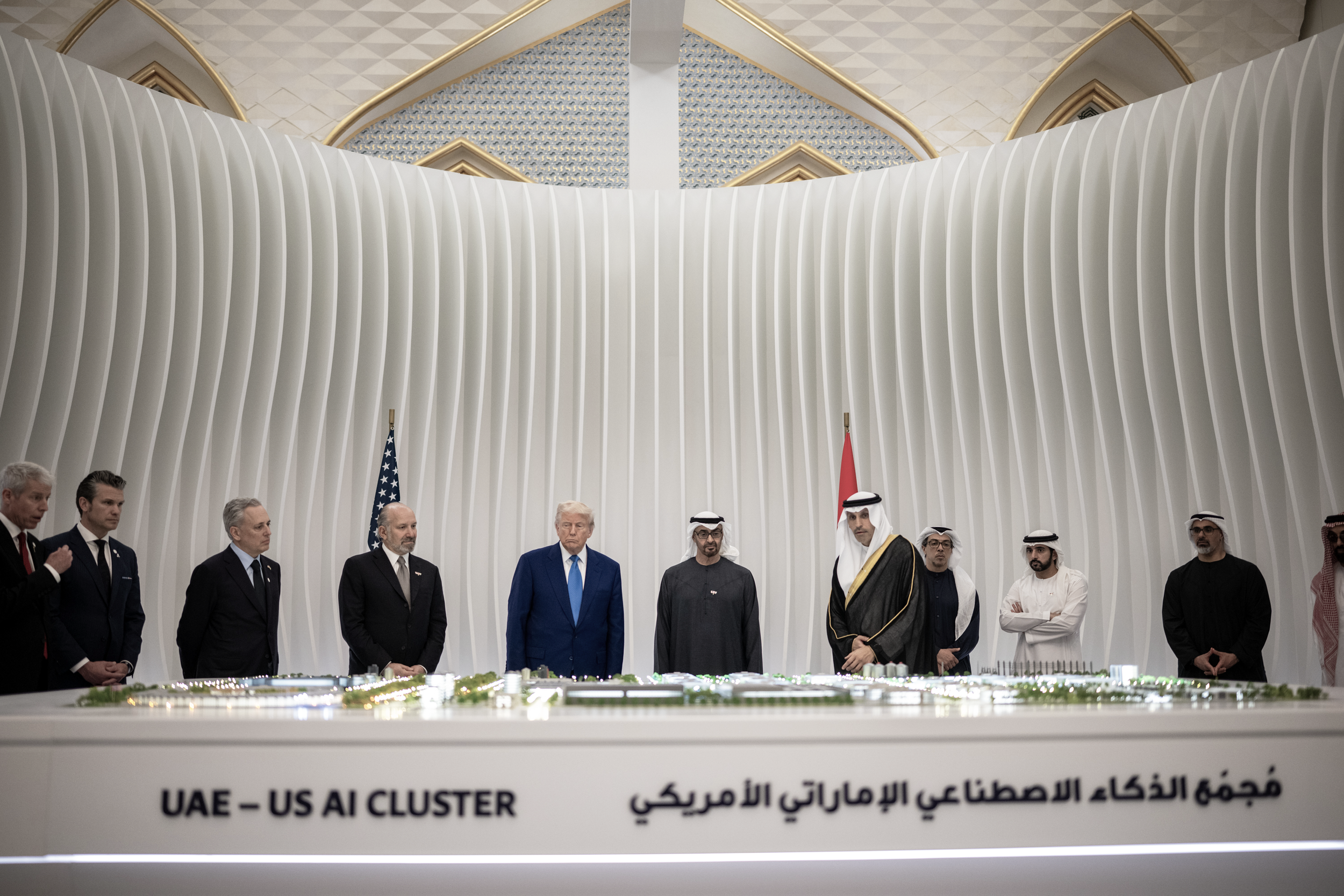
President Donald Trump participates in a tour at Qasr Al Watan in Abu Dhabi, United Arab Emirates, Thursday, May 15, 2025. (Official White House Photo by Daniel Torok)
When the smoke cleared from the Iranian retaliatory strikes on Amazon data centers in early March 2026, Bloomberg noted that digital infrastructure had become a “casualty of war.” But that framing is far too passive. These infrastructures—now openly and contentiously integrated into the unclear military ambitions of firms like OpenAI and Anthropic—aren’t just caught in the crossfire, they are the physical substrate of techno-statecraft. As I’ve argued previously, your cloud account isn’t just hosting data—it’s funding a new era of digitized warfare. To understand why these high-stakes targets sit in the line of fire, we must look past the hardware and into the broader geopolitical architecture of the AI boom where many of the Gulf states aren’t just a “deep pocket” for Silicon Valley, but foundational partners in an accumulation frontier that bridges our carbon past with a silicon future.
In Part I of this series, I explored how inflated AI load forecasts have been leveraged to justify a massive, financialized overbuild of data centers and energy systems. In this article, we take a look at the specific capital that makes this expansion possible. What we are seeing resembles a new phase of petrodollar recycling, in which Gulf oil surpluses are being redirected through sovereign wealth funds and infrastructure finance into the global AI buildout. In the 1970s, oil surpluses stabilized the dollar order through commercial bank lending. Today, those same rents are being channeled through Gulf sovereign wealth funds directly into the “compute + power” asset stack. By trading carbon rents for “safe,” AI-linked cash flows, Gulf states are securing a structural position within the U.S.-led technological order.
The AI economy is not a departure from the fossil fuel era—it is its most ambitious extension. The circuits of accumulation that defined the twentieth century are not being replaced; they are being recycled, acquiring new institutional forms while preserving the same geopolitical hierarchies and geographic vulnerabilities.
Oil surpluses once built the dollar order through US-centered finance
When oil prices quadrupled after the 1973 embargo, the global financial system confronted what economists of the era called a “transfer problem.”[1] Oil-exporting states accumulated enormous dollar surpluses while importing nations ran mounting deficits. The more systemic question was how “the oil countries’ surplus could in principle be recycled to deficit countries by private financial intermediation” without triggering a collapse in trade and finance.[2] The solution that emerged was petrodollar recycling, and the institutional architecture through which it operated reveals something important about how global capitalism under US hegemony reproduces itself across technological eras.
The mechanism operated through two principal channels. First, OPEC’s rapidly accumulating dollar surpluses were deposited in major commercial banks, particularly in the offshore Eurocurrency market. These funds were then intermediated outward as international bank lending, including syndicated loans to governments and corporations in deficit countries. IMF documentation from the period observed that the buildup of foreign-exchange claims by oil exporters was largely held in the form of dollar assets, including “identified Euro-dollar deposits” and claims on U.S. markets, which became an important source of financing for oil-importing economies.[3] Alongside private banking, multilateral institutions expanded official financing mechanisms. The IMF introduced temporary oil facilities beginning in 1974, enabling member states to borrow to offset the sudden deterioration in their external accounts following the oil price increase. Between 1974 and 1976, dozens of countries drew on these facilities to manage balance-of-payments pressures created by higher import costs.[4]
What the historical record makes clear is that petrodollar recycling was never a neutral plumbing operation. It was institutionally structured around US- and UK-centered finance, anchored in the Eurodollar market as an offshore extension of dollar hegemony. In effect, the recycling circuit was governed by US banks, supported by the US government, and shaped by US monetary policy incentives.[5] The effect was not simply to prevent a payments crisis but to reinforce the dollar-centered financial order by routing the world’s most important commodity surplus through its infrastructure.
That reinforcement carried costs that were not immediately apparent. Bank-intermediated recycling sustained global demand and payments in the short term, but it also created the conditions for the debt crises that swept Latin America and much of the Global South in the early 1980s, when US interest rates rose sharply and dollar liquidity contracted. The political economy of petrodollar recycling thus bound oil-export rents, sovereign borrowing, and structural vulnerability into a single circuit whose fragilities became visible only after a decade of apparent stability.
The logic described in this history has not disappeared. The institutional form has changed substantially. The underlying dynamic, oil-export surpluses channeled through US-centered infrastructure to stabilize and accelerate a new accumulation regime, is being replicated today in a context that most observers have not yet named with adequate precision. The AI boom, widely narrated as a story of Silicon Valley innovation and venture capital, has a different material foundation than most accounts acknowledge.
Gulf sovereign wealth funds are financing the AI buildout directly
Indeed, the financial architecture of the contemporary artificial intelligence boom has attracted considerable commentary, but much of it has focused on Silicon Valley firms, institutional venture capital, and a handful of hyperscale technology companies (my own commentary included). This misses the structural role of Gulf sovereign wealth funds within a renewed petrodollar recycling mechanism. In the 1970s, oil surpluses were intermediated primarily through commercial bank balance sheets and syndicated lending. Today a significant share flows through sovereign wealth funds, state-linked AI investment vehicles, and infrastructure partnerships that structurally resemble private equity and infrastructure finance far more than traditional banking. Yet, this follows the same logic—oil-export rents are channeled through US-centered infrastructure to stabilize and extend a new accumulation frontier.
Gulf sovereign wealth funds collectively control more than $3 trillion in assets, most of it derived from decades of hydrocarbon export revenues. The Saudi Public Investment Fund manages approximately $900 billion. The Abu Dhabi Investment Authority, Mubadala Investment Company, and ADQ together hold over $1.5 trillion. The Qatar Investment Authority manages roughly $475 billion. These are strategic capital pools pursuing deliberate technology investment mandates, and AI has become their primary target.
In May 2025, President Trump’s Gulf trip secured over $2 trillion in “deals,” anchored by a claimed $600 billion Saudi investment commitment, a $1.2 trillion “economic exchange” framework with Qatar, and $200 billion in U.S.–UAE commercial deals—linking Gulf capital commitments to the expansion of AI infrastructure and energy. The White House reported that Saudi firm DataVolt was “moving forward” with plans to invest $20 billion in AI data centers and energy infrastructure in the United States, while also listing an additional $80 billion in tech commitments spanning Google, Oracle, Salesforce, AMD, and Uber in both countries. On the UAE side, the White House ties the $200 billion slate to a previously announced 10-year, $1.4 trillion UAE investment framework aimed at AI infrastructure, semiconductors, and energy, and said a same-day U.S.–UAE AI agreement includes UAE commitments to “invest in, build, or finance” U.S. data centers comparable in scale to those in the UAE, alongside tighter alignment on national-security controls for U.S.-origin technology.
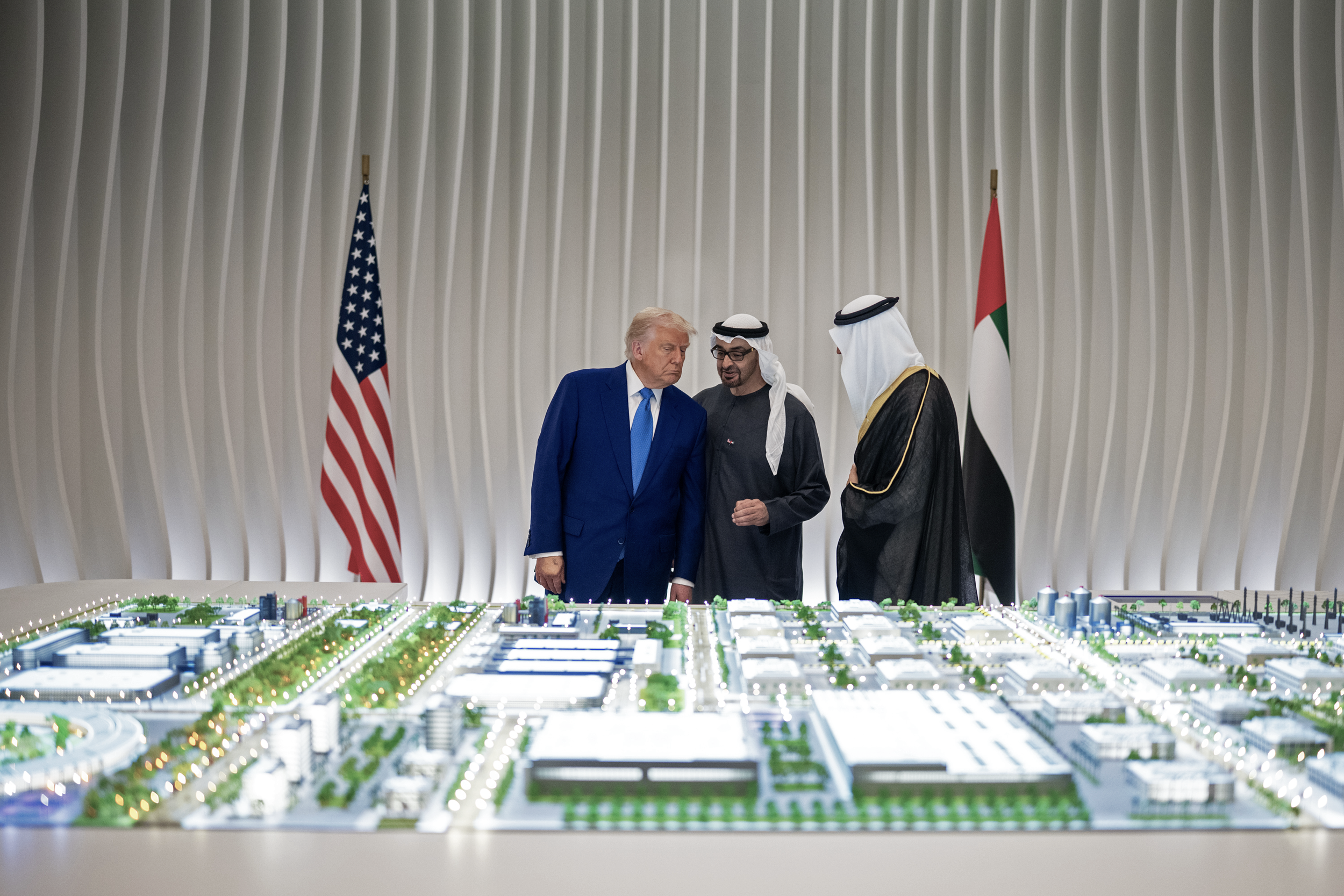
President Donald Trump participates in a tour at Qasr Al Watan in Abu Dhabi, United Arab Emirates, Thursday, May 15, 2025. (Official White House Photo by Daniel Torok)
In May 2025, the White House framed President Trump’s Gulf trip as securing more than $2 trillion in investment frameworks and commercial deals, including a claimed $600 billion Saudi commitment, a $1.2 trillion U.S.–Qatar “economic exchange” framework, and $200 billion in U.S.–UAE commercial deals, with repeated emphasis on AI, data centers, and energy infrastructure. The Saudi fact sheet highlighted DataVolt’s stated plan to invest $20 billion in U.S. AI data centers and energy infrastructure, alongside a separate headline figure of $80 billion in cross-border technology commitments involving firms such as Google, Oracle, Salesforce, AMD, and Uber. Saudi Arabia also created Humain, a Public Investment Fund–owned AI vehicle intended to build an integrated AI stack spanning data centers, cloud, and models. In 2026, Humain invested $3 billion in xAI and publicly linked the partnership to building roughly 500 MW of AI data center capacity, a load comparable to a medium-sized U.S. city. It also signed a $10 billion agreement with AMD and partnered with AWS on a joint $5 billion AI zone in the kingdom.
On the UAE side, the $200 billion deal package was presented as part of a wider 10-year, $1.4 trillion UAE investment framework aimed at AI infrastructure, semiconductors, and energy, and the administration said a same-day U.S.–UAE AI agreement included UAE commitments to invest in, build, or finance large U.S. data centers while tightening controls around U.S.-origin technology. Abu Dhabi’s MGX has emerged as a key conduit for sovereign capital into both AI firms and the U.S. compute real-estate layer. MGX participated in major OpenAI-related secondary financing, and it co-led a consortium acquisition of Aligned Data Centers (reported at roughly $40 billion), placing significant hyperscale capacity under a Gulf-linked ownership structure alongside U.S. partners including Microsoft and Nvidia and financial co-investors tied to BlackRock’s infrastructure platform and other sovereign funds. In parallel, MGX joined Microsoft and BlackRock (via Global Infrastructure Partners) in the AI Infrastructure Partnership, which targets roughly $30 billion in equity and up to $100 billion with debt to finance AI data centers and the power infrastructure that supplies them.
In sum, Gulf hydrocarbon surpluses are being recycled not only into AI companies, but into the coupled “compute + power” asset stack that makes the AI boom buildable, financeable, and scalable, with sovereign wealth increasingly underwriting both hyperscale data center platforms and the energy systems that feed them (see table below). Because Saudi Arabia and the UAE anticipate a long-run plateau in oil demand, they are positioning AI and digital infrastructure as replacement growth sectors within diversification agendas like Vision 2030. Investment in frontier AI firms provides strategic ownership stakes in the systems, chips, and research ecosystems that will define the next technological era. And AI development now requires capital commitments measured in tens or hundreds of billions of dollars, meaning sovereign wealth funds built from decades of oil rents are among the very few actors capable of financing projects at this scale. The financial architecture of the AI boom rests on a three-party coalition of US technology monopolies, asset managers and infrastructure funds, and sovereign wealth funds built from fossil-fuel revenues.
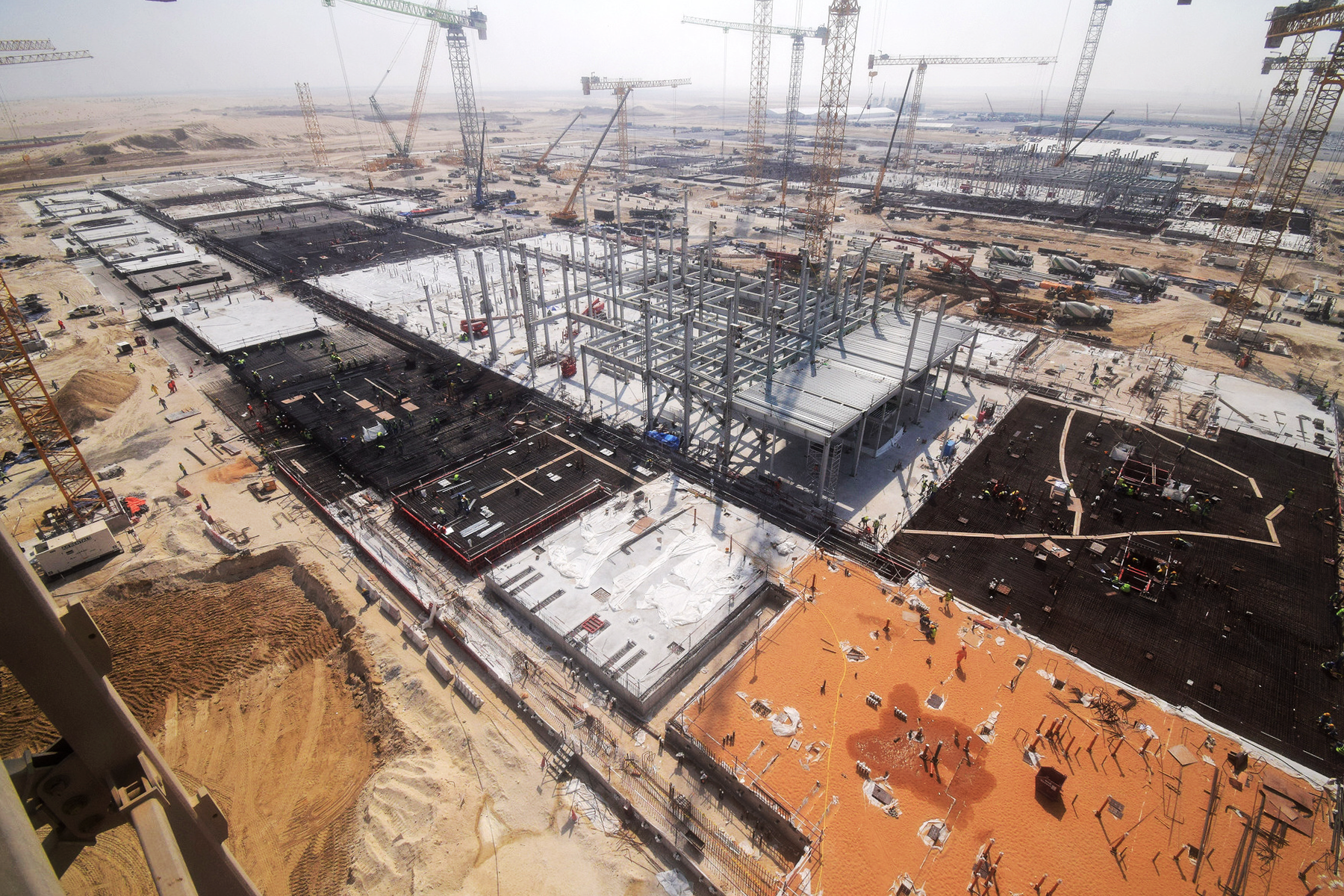
Stargate UAE, a one-gigawatt large-scale AI infrastructure cluster being developed by Khazna Data Centers, a G42 company, within the 5GW UAE–U.S. AI Campus in Abu Dhabi.
Chips for capital has also locked the gulf into the US technology order
The investment flows described above do not operate through arms-length market transactions. They are embedded in explicit geopolitical bargains that have structured the terms of Gulf integration into US-led AI infrastructure. The Commerce Department’s approval in late 2025 of tens of thousands of advanced AI chips to the UAE and Saudi Arabia marked a turning point, with G42 and Humain each receiving clearance to buy semiconductors equivalent to 35,000 of Nvidia’s most powerful Blackwell GB300 processors. These approvals did not happen automatically. They followed G42’s severing of ties with Chinese tech giant Huawei, its divestment from ByteDance, and Humain’s pledge not to purchase Huawei equipment. Washington had, in effect, locked major Chinese firms out of the region’s AI expansion. However, given the complexities of the global supply chain, it is unlikely that the region will fully decouple its technology ambitions from Beijing.
In January 2026, the partnership aimed to go further with the Pax Silica initiative, bringing the UAE and Qatar into a US-led effort to keep advanced semiconductors from reaching China. The deals carry strict security protocols requiring companies to declare planned uses, storage locations, and security measures against unauthorized transfers. Abu Dhabi’s G42 and Saudi Arabia’s Humain are now among the largest non-US operators of Nvidia’s newest hardware globally, positioned to serve AI computing needs for emerging markets across Asia and Africa. OpenAI, G42, Oracle, and Nvidia announced Stargate UAE, a planned one-gigawatt AI campus in Abu Dhabi that would be the largest of its kind outside the United States. OpenAI has stated the campus could eventually serve half the world’s population, underscoring the degree to which Gulf-based AI infrastructure is being positioned as a node in a global compute architecture with planetary reach.
This arrangement is a contemporary version of what the 1970s recycling circuit would recognize as a capital-for-system-access bargain. Then, the price of entry into the dollar-centered financial order was routing oil surpluses through US-centered financial intermediaries. Now, the price of entry into the US-led AI order is cutting ties with Chinese suppliers and accepting US security conditions around hardware use. Gulf sovereign wealth supplies capital. US firms supply chips and system access. AI infrastructure expands in both regions under negotiated terms. These deals are anchored on the premise that political alignment with Washington, abundant sovereign capital, and world-class infrastructure would make the region the third global center for AI alongside the United States and China. The Gulf’s AI ambitions are real, and so is its leverage. By trading Chinese suppliers for US chips, these states have converted their financial surplus into something they hope is more durable: structural position within the global AI order that the United States is working to build.
War has exposed the physical fragility of the new petrodollar circuit
However, the deals, pledges, and geopolitical alignments described above rested on another shared premise. Gulf governments had effectively offered Silicon Valley a bargain: bring your data, models, and chips, and the region would provide capital, energy, and political stability. That assumption was shaken in early March 2026 when Iranian retaliatory strikes across the Gulf damaged Amazon Web Services facilities in the United Arab Emirates and Bahrain. Two AWS data centers in the UAE were directly struck while another in Bahrain was damaged by a nearby drone strike, triggering fires, power disruptions, and service outages across parts of the company’s cloud infrastructure, which serve governments and businesses across the Middle East, South Asia, and parts of Africa.
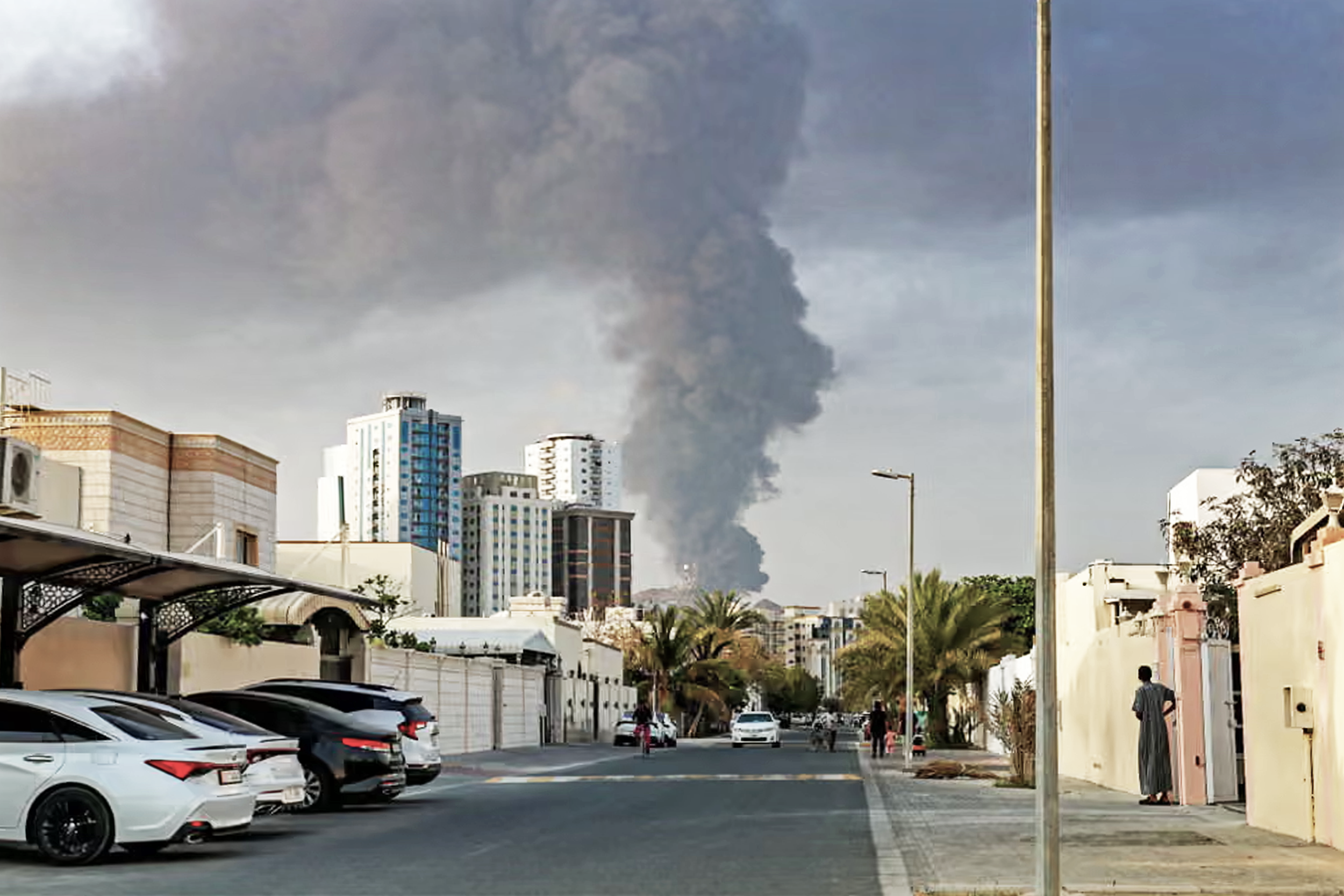
People watch from a street as a tall smoke plume billows following an explosion in Fujairah’s industrial zone in the UAE, March 3, 2026. (Photo by Fadel Senna)
The incident exposed a structural gap in the security assumptions surrounding the Gulf’s emerging AI hub, a vulnerability that some analysts already identified shortly after the wave of investment announcements last year. Yet, policy debates around Gulf technology expansion had largely focused on export controls preventing advanced chips from reaching China. Far less attention had been paid to the possibility that the physical sites where those chips operate—large, power-intensive industrial complexes—might themselves become targets in regional conflict. Commercial data centers are designed for redundancy against cyberattacks and equipment failures, but not for sustained missile or drone strikes. As one security analyst observed in the immediate aftermath, it is “cheaper to attack than to defend.”
The conflict also threatened the fiber-optic cables that carry the data these facilities process. Approximately seventeen submarine cables pass through the Red Sea, carrying the vast majority of data traffic between Europe, Asia, and Africa. Additional cables run through the Strait of Hormuz, serving Iran, Iraq, Kuwait, Bahrain, and Qatar. Iran’s Revolutionary Guard Corps declared Hormuz shut on March 3, threatening to destroy any vessel attempting passage. Houthi militants simultaneously resumed attacks on Red Sea shipping, ending a ceasefire that had held since late 2025. For the first time, both choke points that underpin Gulf data connectivity were effectively closed to commercial traffic simultaneously. The specialized repair ships required to fix severed submarine cables could not safely reach either passage.
In February 2024, a foretaste of this scenario had already materialized when three Red Sea cables were cut by the dragging anchor of a cargo ship struck by a Houthi missile, disrupting 25% of traffic between Asia, Europe, and the Middle East. One cable took five months to repair because vessels could not safely access the area. The 2026 conflict introduced the possibility of damage at a scale that no redundancy architecture has been designed to absorb. The crisis exposes a fundamental asymmetry in how Washington had approached its Gulf technology expansion. Security frameworks were designed to prevent advanced chips from reaching China—not necessarily to protect physical infrastructure from missiles and fiber cutting.
The deeper structural implication is that the AI economy has reproduced a vulnerability the oil economy required decades to even partially address. The Strait of Hormuz first became a geopolitical chokepoint in the context of oil flows, and US military planning around it developed slowly across the Cold War period. Oil pipelines capable of bypassing Hormuz exist as a partial hedge for energy in this respect. No equivalent bypass routes exist for undersea cables yet. The Gulf’s structural advantages remain intact for now, and the investments sunk into its AI architecture are too large to unwind overnight. But the conflict has validated the idea that the physical substrate of the AI boom is geographically constrained and militarily exposed in ways that planners underestimated.
The fragility of the interregnum
Antonio Gramsci famously observed of the disintegrating liberal-capitalist order of the 19th century that “the crisis consists precisely in the fact that the old is dying and the new cannot be born; in this interregnum a great variety of morbid symptoms appear.”6 This sense of being caught between eras perfectly captures the current state of global power. We are witnessing a transition where the digital future of the 21st century is being grafted onto the bones of the fossil-fueled 20th century, creating a hybrid order that is as technologically advanced as it is physically vulnerable.
The computational systems now reshaping labor, knowledge production, and strategic power are being built, in measurable part, with money made from burning carbon. They are being housed in facilities that sit within missile range of active conflict zones. The circuits of accumulation that defined the twentieth century are not being replaced by artificial intelligence, they are being extended through it—acquiring new institutional forms while preserving the geopolitical hierarchies, capital flows, and geographic vulnerabilities from which they emerged.
This extension carries significant consequences for the global financial order. It is reasonable to read U.S. control over frontier semiconductors and the “American AI technology stack” as a new axis of geopolitical leverage that is analogous to, and in some arenas complementary with, earlier forms of power exercised through energy security and oil-market politics. In this reading, access to the next technological era is increasingly mediated through U.S.-defined governance and security conditions, binding AI’s expansion to the institutional architecture of American power, including the dollar-centered financial system and its enforcement capacities.
Yet, this arrangement is inherently fragile. While the dollar still benefits from powerful network effects, fiscal instability and the frequent use of sanctions are eroding global trust. This has created a “financial interregnum” where states and financial actors seek to diversify their assets even without a clear replacement for the dollar.7 While escalations in the Gulf may temporarily reinforce the dollar as a safe haven, those same conflicts accelerate the long-term drive to bypass American-controlled infrastructure. The AI economy has effectively inherited the structural tensions of the oil order, built on the inequalities of exchange and the surpluses of a fossil-fuel past while increasingly embedded in a volatile security architecture. As these systems expand, will the very institutions that made the AI buildout possible eventually generate the pressures that drive the world to seek alternatives to them?
Thanks for reading Techno-Statecraft! Subscribe for free to receive new posts and support my work.
References
James, Harold. 1996. “The 1970s Capital Markets Versus the New International Economic Order.” In International Monetary Cooperation Since Bretton Woods. Oxford, England: Oxford University Press: 313.
Bank for International Settlements. 1974. “Fourty-Fourth Annual Report: 1st April 1973 – 31st March 1974.” Bank for International Settlements: 198. https://www.bis.org/publ/arpdf/archive/ar1974_en.pdf.
International Monetary Fund. 1975. “Annual Report of the Executive Directors for the Fiscal Year Ended April 30, 1975.” Washington, D.C.: International Monetary Fund: 35. https://www.imf.org/external/pubs/ft/ar/archive/pdf/ar1975.pdf.
International Monetary Fund. 1996. “A Second Oil Facility.” In IMF History (1972-1978), Volume 1. International Monetary Fund.
The BIS observed that “US banks played a major part in the recycling of funds” and described policy and regulatory changes that “tie the Euro-market even closer to the US market,” strengthening US-based banks’ capacity to compete in Euro-loan syndicates. See Bank for International Settlements. 1975. “Forty-Fifth Annual Report: 1st April 1974 – 31st March 1975.” Bank for International Settlements: 84; 132. https://www.bis.org/publ/arpdf/archive/ar1975_en.pdf.
Gramsci, Antonio. 1977. Quaderni del Carcere, vol. 1, Quaderni 1–5 Turin: Giulio Einaudi Editore: 311; English translation in 1971 Selections from the Prison Notebooks of Antonio Gramsci, ed. and trans. Quintin Hoare and Geoffrey Nowell-Smith. London: Lawrence & Wishart: 276.
Pforr, Tobias, Fabian Pape, and Johannes Petry. 2025. “Dollar Diminished: The Unmaking of US Financial Hegemony under Trump.” International Organization 79 (S1): S117–33.