Kollar, Justin, and Silvia Danielak. 2026. “Planning Conflict in the Age of AI Infrastructure: Governing Data Center Growth in the United States.” Journal of the American Planning Association, September, 1–14. http://dx.doi.org/10.1080/01944363.2026.2720635
Abstract
Problem, research strategy, and findings
The rapid growth of hyperscale data centers has exposed a governance crisis in U.S. land use planning. This crisis stems from a structural mismatch between parcel-based municipal authority and a form of development whose most consequential resource and fiscal effects extend across jurisdictions and regulatory arenas. Drawing on an interpretive review of local regulatory conflicts and a survey of state legislative activity between 2024 and 2026, we have traced disputes across different stages of data center development and examined how state action reorganizes local planning authority. The analysis shows that outdated zoning categories, opaque utility commitments, and infrastructure decisions made outside municipal review constrain public scrutiny before projects become legally and financially entrenched. Communities have responded through rezoning, moratoria, negotiation, denial, and litigation, and states have alternately strengthened oversight and preempted local control. Local reforms can improve regulatory legibility and preserve public leverage, but municipalities cannot govern cumulative regional effects alone. The deeper challenge is institutional: Planners can therefore use local authority strategically while coordinating with utility regulators, water agencies, state legislatures, and regional institutions.
Takeaway for practice
Planners should treat large data centers as utility-scale infrastructure, with land, energy, water, fiscal, and environmental effects that extend beyond individual sites and jurisdictions. Local governments should establish distinct use categories, performance thresholds, and disclosure requirements before applications are filed, while requiring utility consultation, water-capacity findings, interagency referral, and fiscal review for major projects. State and regional agencies should supply cumulative infrastructure data, coordinate grid and water planning, and establish baseline siting and cost-allocation rules. Time-limited moratoria are most defensible when tied to a defined program of code writing and infrastructure study.
Excerpts
A single project may appear as a warehouse in a zoning code, a massive electrical load in regional transmission planning, and a costly infrastructure commitment in state utility regulation. Its resource and fiscal effects can therefore extend far beyond the site, exposing the seams of fragmented regulation and oversight. Conflict remains highly visible locally because zoning hearings and moratoria occur at the municipal level. Yet state incentives, utility regulation, permitting regimes, and preemption laws often determine the overall buildout and constrain local authority. (2)
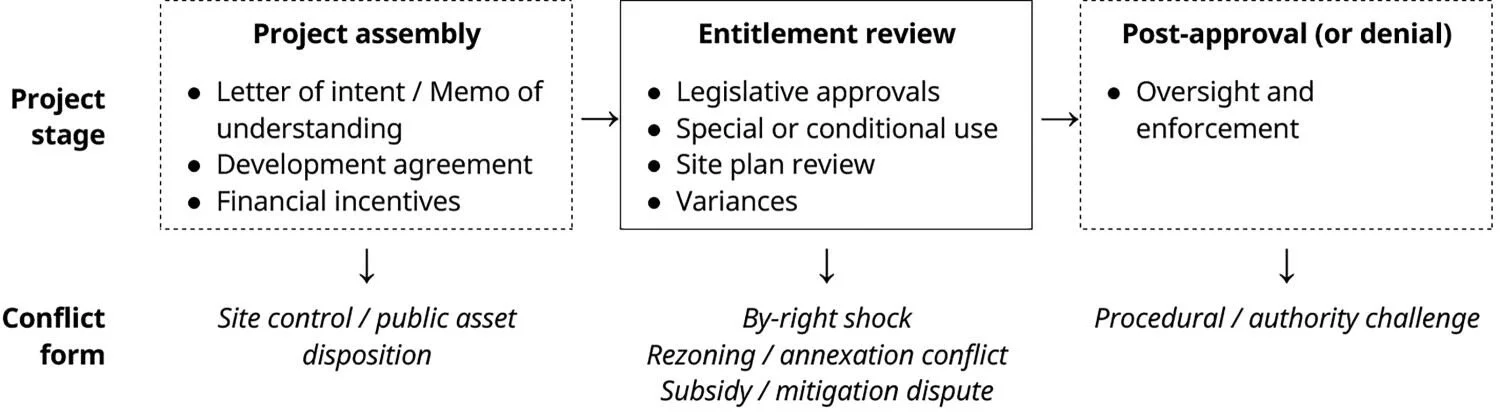
Figure 1. Possible forms of conflict across data center project stages.
Most zoning codes were not written for hyperscale digital infrastructure, public review works poorly when major effects fall offsite or remain hidden by confidentiality, and unequal access to information weakens both trust and the substance of participation. One report has estimated that local opposition blocked or delayed roughly $64 billion in U.S. data center projects between May 2024 and March 2025 (Data Center Watch, 2025). These conflicts show not only outright refusal of digital infrastructure but a politics of institutional catch-up, in which local governments discover that inherited regulatory tools no longer fit the infrastructure before them. (4)
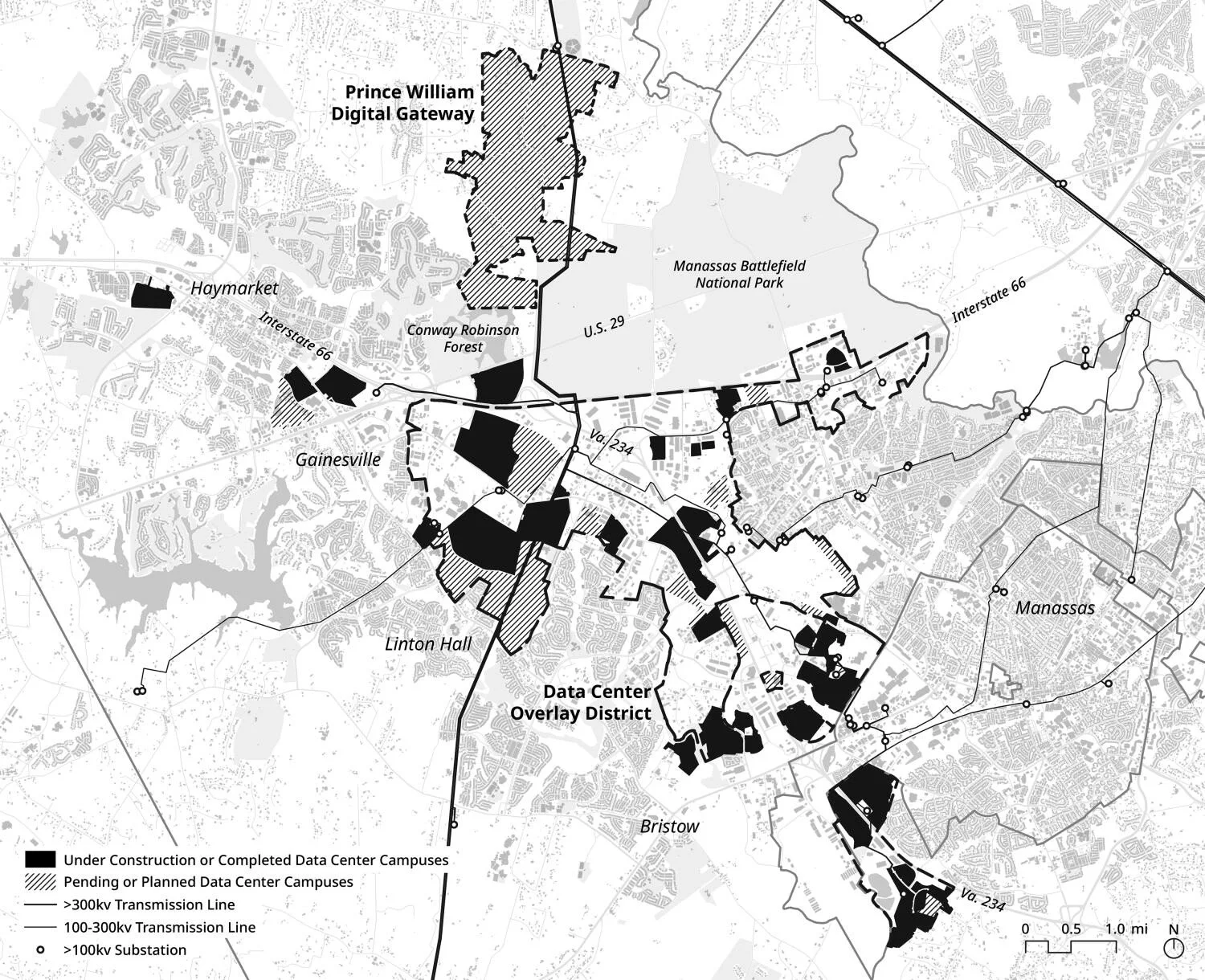
Figure 2. Prince William County’s Data Center Overlay District and Digital Gateway Plan. Data sources: Prince William County, Homeland Infrastructure Foundation-Level Data, Open Street Map.
The most consequential policy shift is occurring in utility and ratepayer regulation. As hyperscale facilities demand power at levels comparable to small cities, states must confront a distributional question that earlier subsidy regimes (largely) ignored: Who pays for the infrastructure these loads require? Policy increasingly seeks to prevent the costs of new transmission, generation, and reserve capacity from falling on ordinary residents (Whoriskey, 2025). (6)
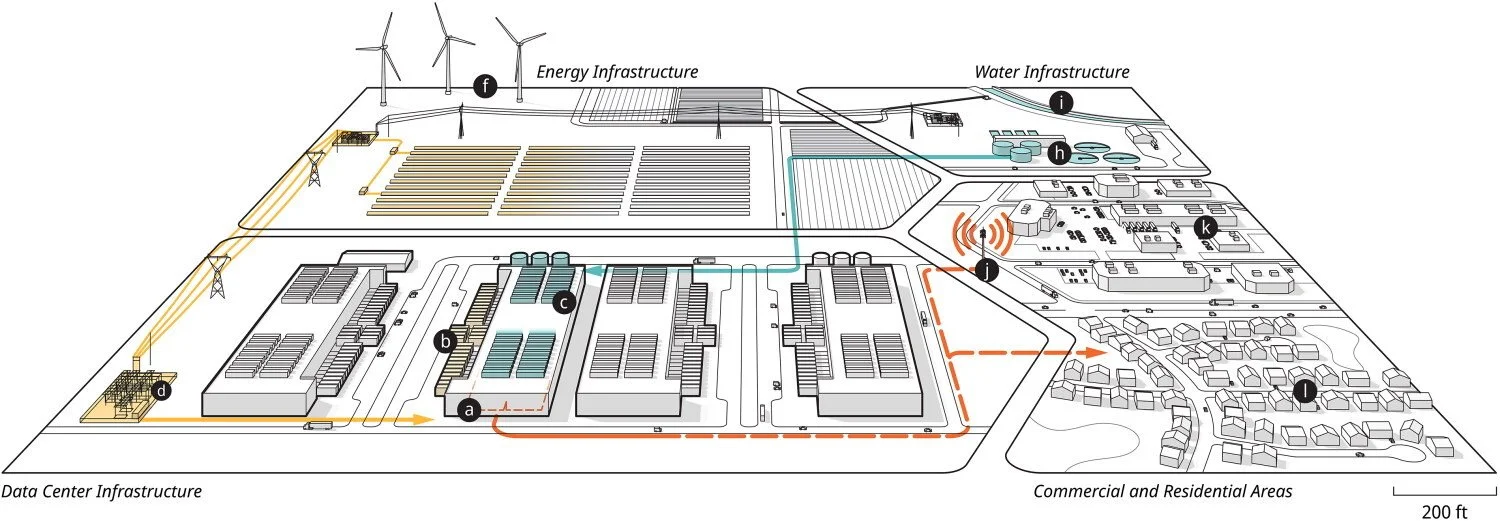
Figure 3. The infrastructural nexus of data centers. Data center infrastructure: (a) data center server racks; (b) backup diesel generators; (c) water-cooled conditioning system; (d) electrical substation, energy infrastructure: (e) ground-based solar array; (f) wind energy facility; (g) agricultural land, water infrastructure; (h) water treatment plant; (i) water source, canal infrastructure; (j) commercial and residential areas: wireless 5G tower; (k) commercial and industrial areas; (l) residential areas.
In this shifting landscape, the task for planners is not to perfect procedural checklists, but to deploy their authority strategically before infrastructure commitments harden. The land use problem is reflective of the uneven political terrain on which data center infrastructure is assembled. Local reform must therefore move beyond creating new use categories to establish substantive standards, disclosure requirements, and review procedures capable of withstanding legal scrutiny. Planners should treat water demand, fiscal exposure, backup generation, and energy load as core land use questions within a context of social divides and partisan fragmentation, rather than secondary, technical issues deferred to utilities. (11)